
Osseous (Flap) Surgery
Osseous (Flap) Surgery
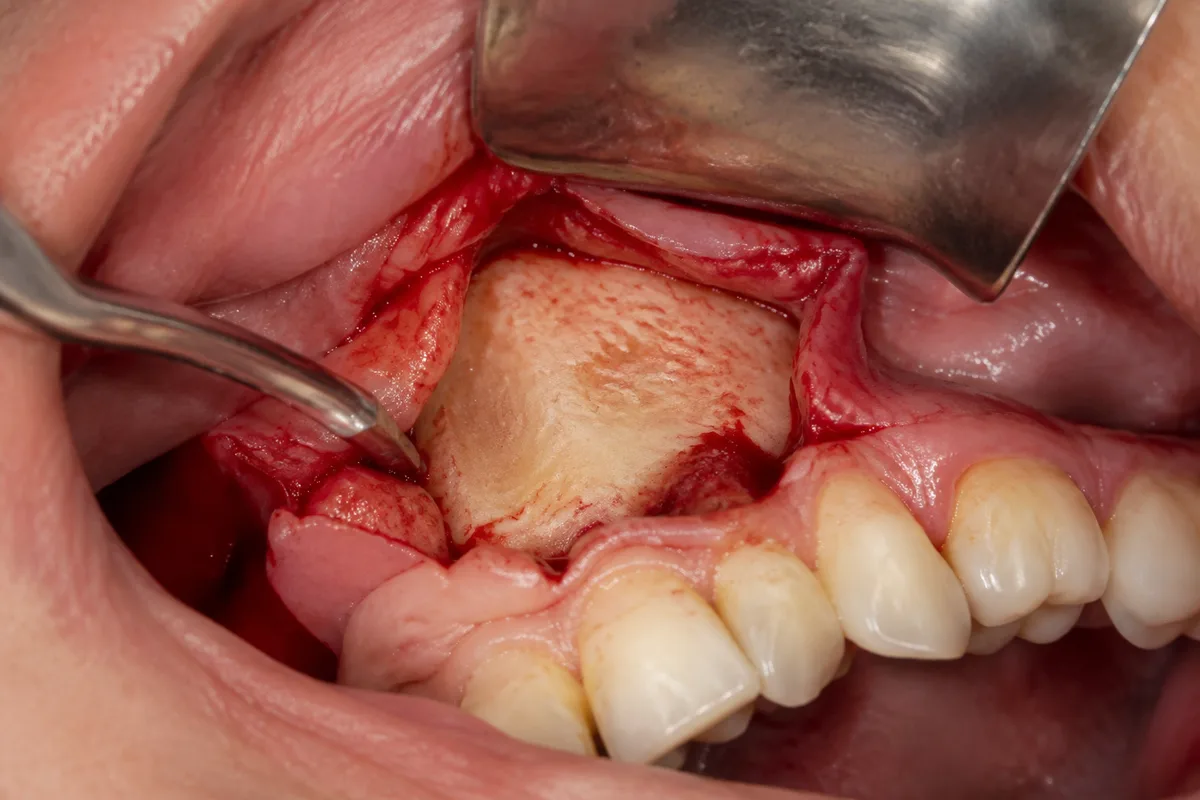
Osseous surgery, sometimes called flap surgery, is a periodontal treatment used to address advanced gum disease that has not responded to nonsurgical care. During the procedure, the gum tissue is gently lifted to allow direct access to the tooth roots and underlying bone, so that bacteria and tartar deposits below the gumline can be thoroughly removed. In some cases, the bone surface is reshaped to reduce pockets where bacteria can collect, and the gum tissue is then repositioned and secured to promote healthy reattachment.
When This Procedure Is Considered
- Persistent Gum Pockets — Deep spaces between teeth and gums that remain after scaling and root planing.
- Ongoing Bone Loss — Signs of bone deterioration around the tooth roots identified during a gum evaluation.
- Difficulty Maintaining Hygiene — Areas that are hard to clean effectively at home due to pocket depth or irregular bone contours.
Diagnosis and Planning
Digital X-rays are used to evaluate the bone level and structure around affected teeth, helping to guide treatment planning before any surgical steps are taken.
Related Care at Our Practice
- Scaling & Root Planing — A nonsurgical first step often tried before considering flap surgery.
- Periodontal Maintenance — Ongoing care to help support gum health after treatment.
- Gum Grafting — Sometimes recommended alongside osseous surgery to address gum recession.
This content is for general information only and isn't dental or medical advice. Talk with your dentist or orthodontist about your own situation. If you have a medical emergency, call 911.