
Why Teeth Get Sensitive — and What You Can Do About It
If you've ever winced after a sip of cold water or a bite of ice cream, you already know how uncomfortable tooth sensitivity can be. It's one of the most common complaints dentists hear, and it can show up suddenly or build slowly over time.
The good news is that sensitivity usually has an explainable cause, and many of those causes respond well to simple changes in habits or a visit to your dentist. Understanding what's behind the discomfort is the first step toward feeling better.
What Makes Teeth Sensitive in the First Place
Underneath the hard, protective layer of enamel on your teeth is a softer material called dentin. Dentin is full of tiny tubules that connect to the nerve inside the tooth. When enamel wears down or gums pull back and expose the tooth root, those tubules become more exposed to temperature changes, sweet foods, or even air. That exposure is what causes the short, sharp zing many people describe as sensitivity.
Enamel can wear away for a number of reasons, including brushing too hard, grinding or clenching your teeth, acidic foods and drinks, or simply the natural wear that happens over the years. Gum recession, where the gum tissue shifts away from the tooth, can happen because of gum disease, aggressive brushing, or genetics.
Other causes include cracked teeth, worn fillings, or recent dental work, which can leave teeth feeling more reactive for a short while. Sensitivity can also be a sign of tooth decay or a bigger issue with the tooth's nerve, so it's worth paying attention to when it starts and how long it lasts.
Common Triggers You Might Notice
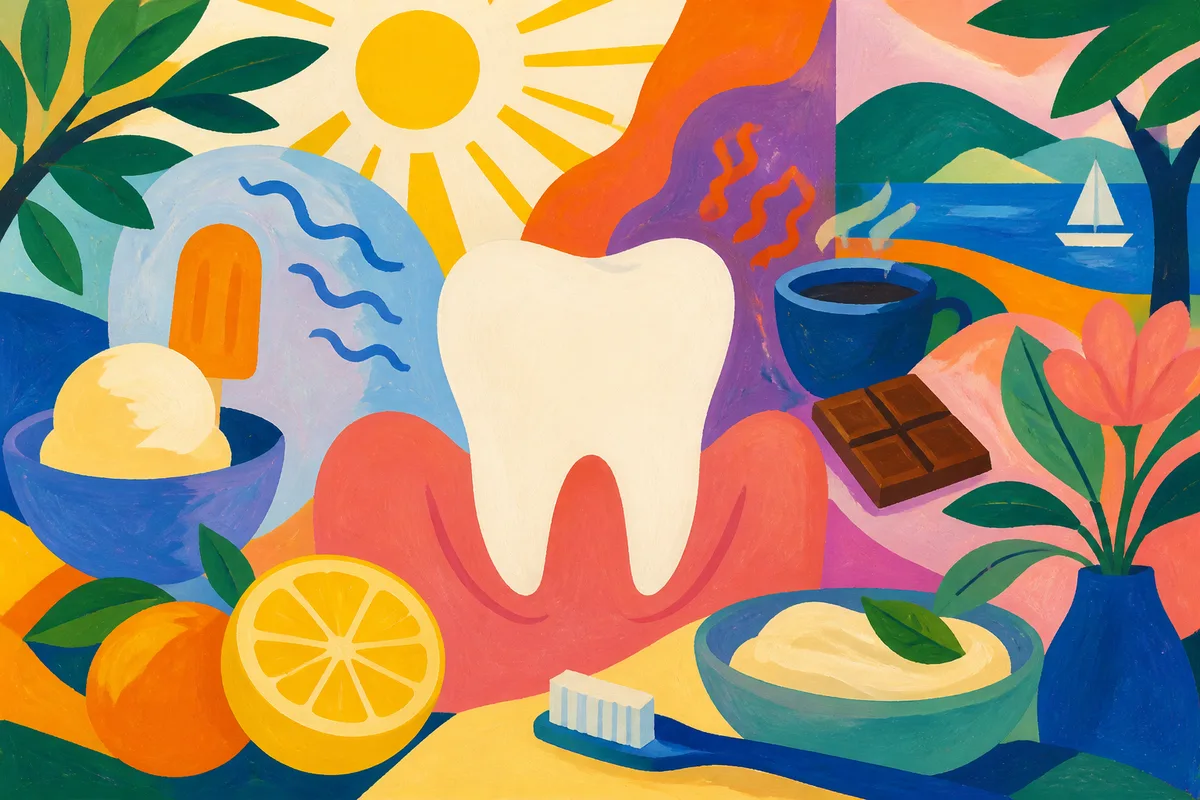
Sensitivity often shows up in predictable moments. Cold drinks or ice cream are classic triggers, but so are hot beverages, sweet snacks, and even cold air on a winter day. Some people notice it most while brushing or flossing, especially near the gumline.
The pattern of your sensitivity can actually offer clues. Discomfort that lingers after the trigger is gone may point to a different issue than a quick twinge that fades right away. Sharing these details with your dentist during an exam can help narrow down what's going on.
What Helps at Home
Small daily habits can make a real difference. Using a soft-bristled toothbrush and a gentle touch helps protect both enamel and gum tissue. Toothpaste made for sensitive teeth can also help by working to calm the nerve endings inside those exposed tubules over time.
Cutting back on very acidic foods and drinks, like soda or citrus juice, gives enamel less to fight against. If you know you grind your teeth at night, a night guard can reduce the wear and pressure that often leads to sensitivity in the first place.
It also helps to keep up with regular cleanings and checkups. Routine visits allow your dental team to catch early enamel wear, gum recession, or small areas of decay before they turn into bigger sources of discomfort.
When It's Time to Have It Checked
Occasional mild sensitivity is common and often manageable with simple changes. But if the discomfort is getting worse, sticking around longer than a few seconds, or affecting just one tooth instead of several, it's worth having a closer look. These patterns can point to things like a cracked tooth, a failing filling, or an area of decay that needs treatment.
At KSG Dental in New York, NY, a comprehensive exam can include digital X-rays, a gum evaluation, and a look at your bite and enamel to help figure out what's causing the sensitivity. Depending on what's found, options might range from a fluoride treatment or a tooth-colored filling to scaling and root planing for gum-related causes.
If you've been putting up with sensitive teeth and wondering why, you don't have to guess on your own. A short conversation with your dental team can help you understand what's happening and what steps might bring some relief. Reach out to KSG Dental to schedule a visit and talk through what you've been noticing.
Questions about your own care? The team at KSG Dental is happy to help — call us at (347) 640-5989 or request an appointment.
This content is for general information only and isn't dental or medical advice. Talk with your dentist or orthodontist about your own situation. If you have a medical emergency, call 911.