
Digital X-Rays
Digital X-Rays
Digital X-rays are a standard part of modern dental care, giving our dentists a clear view of what's happening beneath the surface of your teeth and gums. At Dental Office of Dr. Salm, Kanner, and Grandeau, this low-radiation digital imaging is used for diagnosis and treatment planning, helping to guide decisions about your care from routine exams to more involved procedures.
What digital X-Rays is
Digital X-rays use electronic sensors instead of traditional film to capture images of your teeth, roots, and jawbone. The sensor sends the image directly to a computer screen, where it can be viewed, enlarged, and adjusted for contrast almost instantly. This replaces the older film-based process, which required chemical developing and produced images that couldn't be easily enhanced or shared.
Because digital sensors are more sensitive to X-ray exposure than film, they typically require less radiation to produce a usable image. This is one of the key improvements digital imaging brought to dentistry: clearer pictures with a lower radiation dose. The images can also be stored electronically, compared side by side over time, and referenced quickly during an exam or consultation.
How we use it at Dental Office of Dr. Salm, Kanner, and Grandeau
Our dentists use digital X-rays as part of diagnosis and treatment planning, whether that means checking for cavities between teeth, evaluating the health of a tooth's root, or assessing bone structure before a procedure. Because the images appear on screen right away, they can be reviewed with you during your visit rather than after the fact.
Digital X-rays often work alongside our other on-site tools. Intraoral cameras, for example, let you see photos of the surface of your teeth, while X-rays reveal what's happening underneath — together giving a more complete picture during an exam. When treatment involves same-day CEREC crowns, imaging can also play a role in understanding the tooth's structure before a crown is designed and milled.
What it means for you
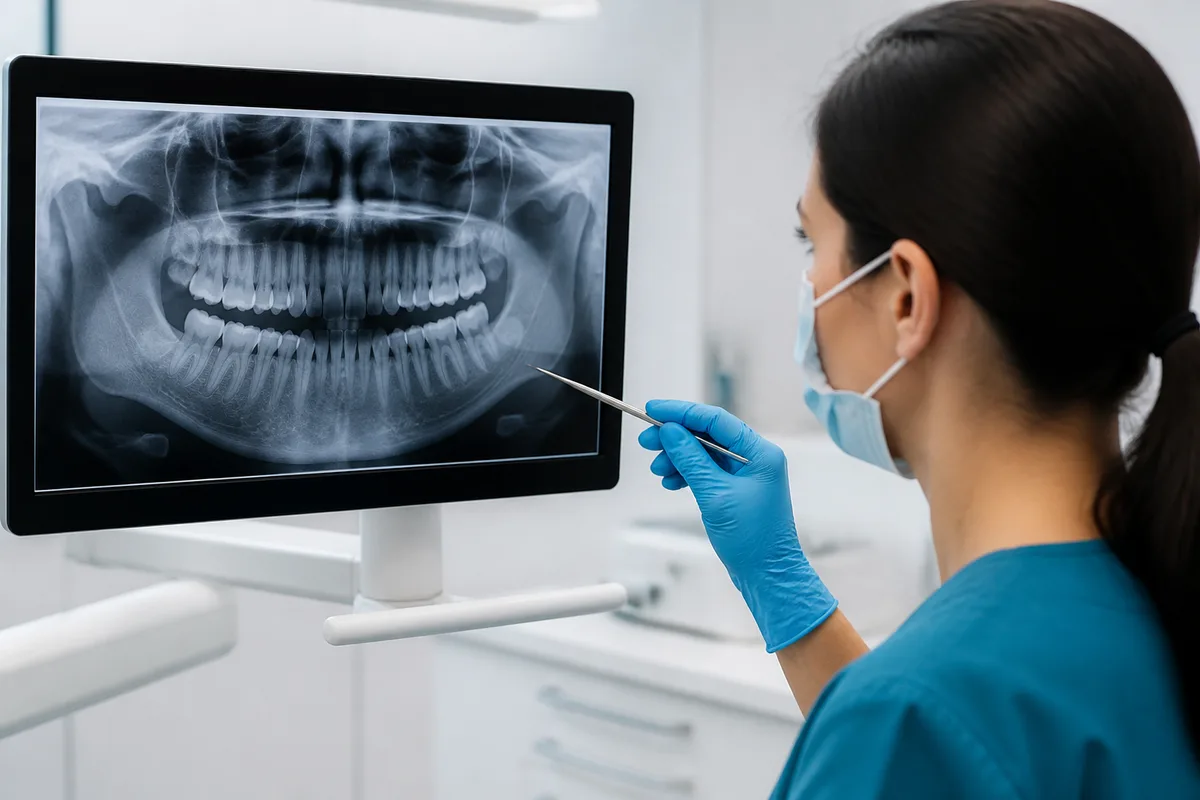
Digital imaging generally means less waiting, since there's no film to develop and images appear on the monitor within moments. This allows your dentist to explain findings to you directly, pointing to the actual image rather than describing it secondhand. Seeing your own X-ray can make it easier to understand a recommended treatment and why it's being suggested.
The reduced radiation exposure associated with digital sensors is also worth noting for patients who are mindful of X-ray frequency, whether due to the number of visits they've had or general preference for minimizing exposure. Additionally, because images are stored digitally, they can be pulled up quickly for comparison at a future visit, which can help track changes in a tooth or area of concern over time without needing to retake older films.
What to expect during your visit
Before an X-ray is taken, you'll typically be asked to wear a lead apron or thyroid collar for protection. A small sensor, about the size of a stamp, is placed inside your mouth against the area being imaged, or an external device may capture a wider view of your jaw and bite. You may be asked to bite down gently or hold still for a few seconds while the image is captured.
The process itself is quick — most digital X-rays take only a few seconds per image, and a full set for a routine exam is usually completed within a few minutes. There's no discomfort involved, though some patients notice mild pressure from the sensor's edges. Once captured, the image appears on a nearby screen, and your dentist can review it with you as part of your exam or consultation.
Frequently asked questions
Are digital X-rays safe?
Digital X-rays use a lower dose of radiation than traditional film X-rays, and dental X-rays in general involve a very small amount of exposure. A lead apron or thyroid collar is typically used for added protection during the process.
How long does it take to get digital X-ray results?
Digital X-ray images appear on a computer screen within seconds of being captured, so your dentist can review them with you right away during your visit rather than waiting for film to be developed.
How often will I need digital X-rays?
How frequently X-rays are needed depends on your individual dental history, current oral health, and whether you're being evaluated for a specific concern. Your dentist can help determine an appropriate schedule based on what's relevant to your care.
Who is digital X-ray imaging suitable for?
Digital X-rays are a routine part of dental care for most patients, including children and adults, as part of general exams and treatment planning. Your dentist will take your individual circumstances into account when recommending imaging.
If you have questions about digital X-rays or would like to schedule a visit, reach out to Dental Office of Dr. Salm, Kanner, and Grandeau — we're happy to talk through what to expect.
This content is for general information only and isn't dental or medical advice. Talk with your dentist or orthodontist about your own situation. If you have a medical emergency, call 911.