
Same-Day CEREC Crowns
Same-Day CEREC Crowns
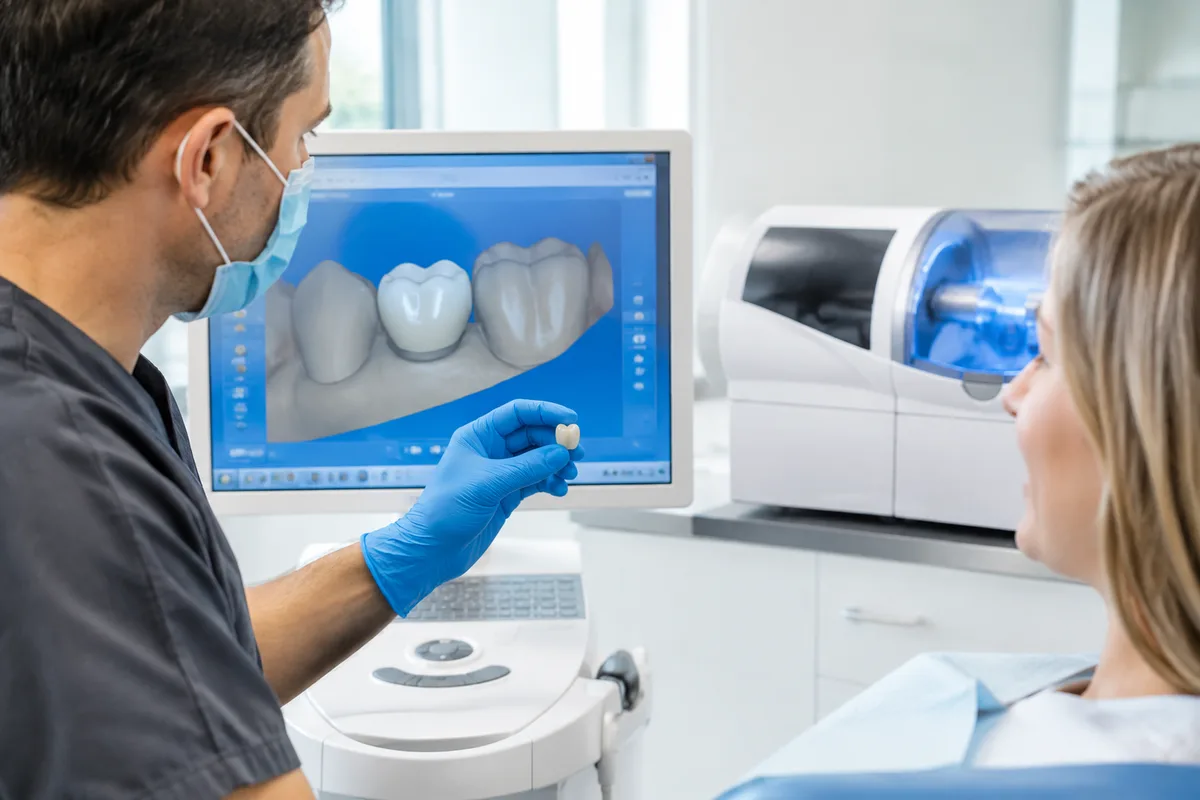
When a tooth needs a crown, waiting one to two weeks for a lab to fabricate it used to be standard. Same-Day CEREC Crowns use in-office milling technology to design and produce a custom crown while you wait, so the whole process — from preparing the tooth to fitting the finished restoration — can often happen in a single visit.
What Same-Day CEREC Crowns is
CEREC stands for Chairside Economical Restoration of Esthetic Ceramic. It refers to a system that combines digital scanning, computer-aided design, and an in-office milling unit. Instead of taking a physical impression of the prepared tooth and sending it to an outside dental laboratory, the dentist captures a digital scan of the tooth. Software then designs a crown that matches the shape and bite of the surrounding teeth, and a small milling machine carves the crown from a solid block of ceramic material.
This approach improves on the traditional two-visit crown process, which typically requires a temporary crown to protect the tooth while the permanent one is made off-site. With same-day milling, there is generally no need for a temporary crown, and the fit and color can be checked and adjusted immediately, before the patient leaves the chair.
How we use it at Dental Office of Dr. Salm, Kanner, and Grandeau
At our practice, same-day crown milling is used to design and deliver crowns in a single visit, replacing the need for a temporary crown and a separate return appointment. This technology works alongside our other on-site diagnostic tools: digital X-rays help evaluate the tooth and surrounding bone before treatment, and intraoral cameras allow you to see the condition of the tooth on a screen, which can help explain why a crown is recommended and what the finished result should look like.
Same-day crowns are part of our broader restorative offerings, which also include inlays and onlays, bridges, and root canal therapy for teeth that need additional support after treatment. Our dentists — trained in general dentistry — are able to evaluate whether a same-day crown is the right option for a given tooth, or whether another restoration would serve better.
What it means for you
For many patients, the biggest advantage of same-day crowns is convenience: one visit instead of two, and no gap where a temporary crown might feel loose or come off between appointments. Because the crown is designed and milled digitally, the fit can be checked and refined right away rather than waiting to see how a lab-made crown fits once it arrives.
Other general benefits patients often value include:
- Fewer injections — typically only one round of anesthesia is needed, rather than one for the prep and another for the final placement.
- Less time with a temporary — there is usually no interim crown to manage or worry about.
- Visual clarity — seeing the digital design or an intraoral camera image can make it easier to understand the treatment.
- Material consistency — the ceramic block used for milling is selected to match the surrounding teeth.
What to expect during your visit
The appointment generally begins with an exam and, if needed, a digital X-ray to assess the tooth and the bone around it. The dentist then prepares the tooth by removing any decay or damaged structure and shaping it to receive the crown. Instead of a putty-based impression, a digital scanner is used to capture the shape of the prepared tooth and the neighboring teeth.
While the crown is being designed and milled, you wait in the office; the milling process itself typically takes a period of time measured in minutes rather than hours. Once the crown is ready, the dentist checks the fit, color, and bite, making adjustments as needed, before permanently bonding it into place. Most patients can eat and speak normally once numbness wears off, and the visit is completed without a follow-up appointment required for the crown itself.
Frequently asked questions
Is the milling process safe?
Yes. The digital scanner and milling unit are standard equipment used in general dentistry, and the ceramic material used for the crown is biocompatible and commonly used for dental restorations. Your dentist will review your specific tooth and health history to confirm this approach is appropriate.
How long does the whole process take?
Most same-day crown appointments are completed in one visit, combining preparation, scanning, milling, and placement. The exact length depends on the tooth being treated and whether any additional evaluation, such as X-rays, is needed beforehand.
Will I feel anything during the procedure?
Local anesthesia is used before the tooth is prepared, so you should not feel pain during that portion. Some patients notice mild sensitivity for a short time after the anesthesia wears off, which is typical after any crown placement.
Who is a good candidate for a same-day crown?
Same-day crowns are commonly used for teeth that are cracked, worn, heavily filled, or in need of a crown following root canal therapy. Your dentist will examine the tooth to determine whether a same-day crown, an inlay or onlay, or another restoration is the better fit.
If you have a tooth that may need a crown, reach out to Dental Office of Dr. Salm, Kanner, and Grandeau to ask whether a same-day CEREC crown is a good option for you.
This content is for general information only and isn't dental or medical advice. Talk with your dentist or orthodontist about your own situation. If you have a medical emergency, call 911.